Vorterra is a passive, plug-and-play inline unit that conditions irrigation water as it flows — so it wets deeper, spreads wider and carries nutrient further from the same emitters. Growers run it to hold yield while turning water and fertigation down.
A Vorterra unit is a flanged spool — Schedule 80 PVC or steel — that replaces a straight run of pressurized pipe. Inside is a fixed internal geometry: no motor, no impeller, no dosing, no filter to change. Your pump, filters, manifold, laterals, emitters and scheduling all stay exactly as built.
Fixed helical geometry converts straight flow into a fast centripetal spiral — the water moves, the unit doesn't.
Rotation pulls static pressure down along the axis until vapour cavities form — ordinary fluid dynamics in an unusual geometry.
Downstream of the throat the cavities collapse, and the water leaves the far flange behaving differently in your soil.
Mark Lopez, President of the Orange County Farm Bureau, walks through how easy the unit is to install — and the results he has seen on his own ground so far.
Flanged both ends — on a line with an existing flanged spool or a straight run you can take out, it goes in with gaskets and bolts. No glue joints to cure, no re-plumbing of the manifold.
Controlled 8-treatment factorial trial on iceberg lettuce. Water productivity improved +23.1%, and treated plots could skip a scheduled irrigation and still out-yield controls.
Three consecutive strawberry seasons on Vorterra with A.G. Kawamura, former California Secretary of Food & Agriculture — with 10–20% season-over-season yield gains reported.
A 2026 demonstration block hosted with University of California Agriculture & Natural Resources — the harvest donated to Second Harvest Food Bank of Orange County.
A remarkable technology I intend to expand across my operations.
Commercial operations running Vorterra today — from one of the largest strawberry growers in the United States to the largest pepper grower in the world.
The Colorado River Basin is negotiating its post-2026 operating rules against reservoirs at historic lows. Demand-side efficiency — making every delivered acre-foot do more — is the one tool growers, districts and agencies all share. It's also the only thing this hardware does.
The Arizona trial's treated plots skipped a scheduled irrigation, confirmed by soil-moisture sensors — conservation as a measured event, not an estimate.
Yield held with nitrogen cut by roughly a quarter — a water-quality lever in the same piece of pipe.
Passive hardware: no chemicals dosed, no power drawn, no discharge — it changes what water does, not what's in it.
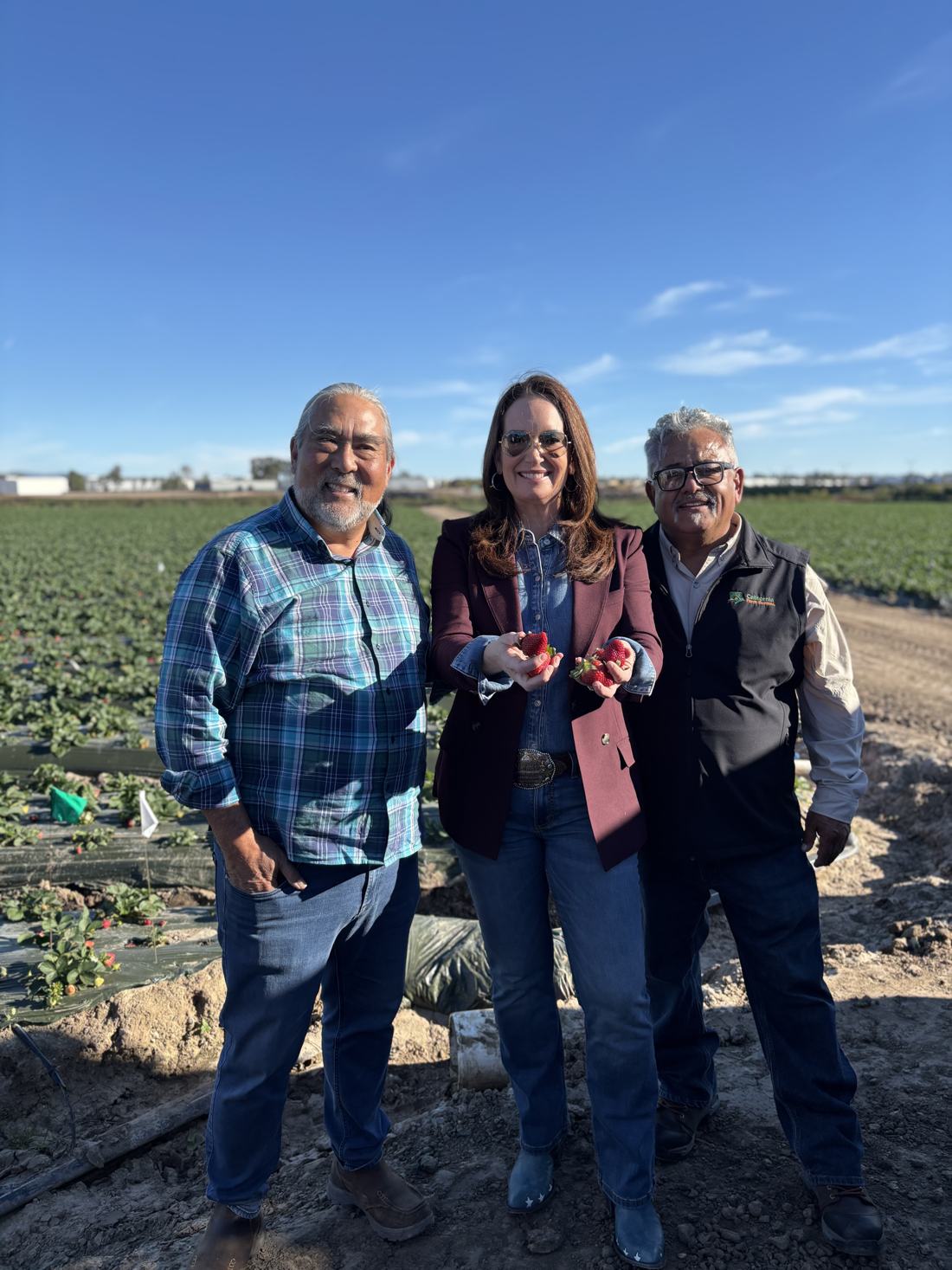
Federal attention, on the ground. U.S. Secretary of Agriculture Brooke L. Rollins visiting the Vorterra-equipped Orange County strawberry operation, with A.G. Kawamura and Orange County Farm Bureau President Mark Lopez.
Documentary record of a field visit. The presence of a public official is not an endorsement of Vorterra or its products.
Yield up 6.8–20.5% across every treatment pair over a 97-day trial — water productivity up 23.1%.
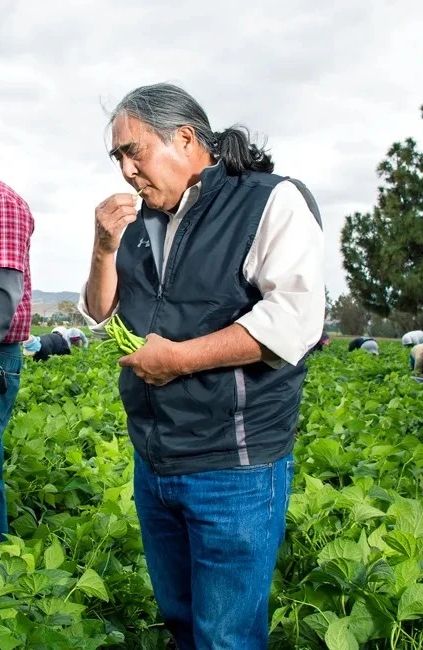
The former California Secretary of Agriculture joins — after three seasons running Vorterra on his own ground.
The Secretary walked the Orange County strawberry operation that has run Vorterra for three seasons.
A pilot runs a treated demo block at 25–30% less water and fertigation against a matched control, with the plant data to show it held. Units are leased — Vorterra retains service, and a 10-year warranty stands behind the hardware.